 产业资讯
产业资讯
 药明康德
药明康德  2025-12-19
 1820
1820
编者按:超过85%的致病蛋白因其在结构与功能上的限制,使传统小分子与抗体疗法难以奏效,长期被视为“不可成药”。但随着结构生物学、化学生物学以及新分子机制等领域的不断突破,“不可成药”的边界正在被重新改写。科学进展和新型治疗模式正为此前难以触及的关键蛋白打开全新的干预路径。截至今年9月,已有超过10款靶向此类“不可成药”靶点的新药成功获批上市,并带动百余款候选药物加速向前推进。在这一创新浪潮中,靶向蛋白降解(TPD)技术凭借“从源头清除病理蛋白”的作用机制受到关注,也为传统难以成药的靶点带来了治疗的机会。面对TPD中蛋白降解靶向嵌合体(PROTAC®)等结构复杂、机制新颖的分子类型,药明康德早在TPD技术兴起之初便前瞻性布局,围绕TPD开发构建起一体化赋能平台,助力全球合作伙伴高效推进PROTAC®药物从早期发现迈向临床试验阶段。本文将介绍“不可成药”背后的科学难点,并展示包括靶向蛋白降解在内的前沿技术如何加速将“不可能”变为“可能”。
在生命科学领域,“不可成药”(undruggable)蛋白指那些难以通过传统药物方式进行调控的关键靶点。这类蛋白通常在维持细胞命运、调控信号通路或驱动疾病进展中发挥核心作用,但却因其独特的结构或功能特征,难以被小分子药物或抗体精准结合。从机制来看,导致蛋白“不可成药”的主要原因包括以下几方面。
首先,一些蛋白缺乏明显的结合口袋。例如小三磷酸鸟苷水解酶(GTPases)中的RAS家族成员(KRAS、HRAS与NRAS),由于其表面缺乏可靶向的结合位点,长期以来被视为典型的不可成药靶点。当蛋白主要依赖蛋白-蛋白相互作用(PPI)发挥功能时,情况同样复杂——部分转录因子(TFs)与表观遗传靶点的PPI界面通常较大、较浅或结构不明确,使得常规小分子难以有效结合,其中Bcl-2家族的抗凋亡蛋白便是代表性例子。与此相似的是具有高度动态结构、能够与多种蛋白相互作用的内在无序蛋白(IDPs),由于缺乏稳定的结合界面,也属于难以成药的类别。此外,在调节细胞动态中发挥重要作用的磷酸酶(phosphatases),因家族内部结构高度相似,容易导致药物选择性不足与较高的副作用风险,同样阻碍了相关药物发现的进展。
除了结构因素外,蛋白的功能属性及其细胞内定位同样深刻影响其成药性。许多表观遗传靶点和转录因子不仅是致病机制中的关键节点,在正常细胞中也承担着重要生理功能,这使得靶向此类蛋白的药物更容易引发毒性风险。同时,由于它们多位于细胞核内,也显著增加了药物递送的难度——一旦药物无法在细胞核中达到足够的有效浓度,其疗效往往难以充分发挥。
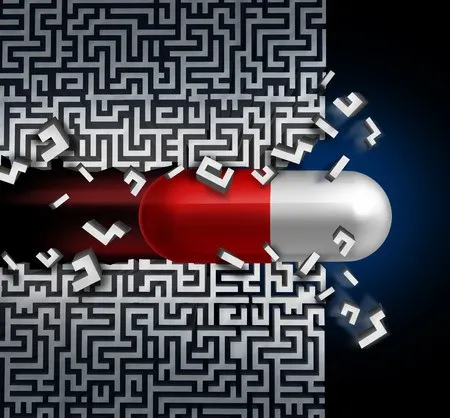
图片来源:123RF
在此背景下,如何高选择性地靶向不可成药靶点并克服耐药性问题,被视为当前医药研发中既极具挑战、又极具潜力的前沿方向。以转录因子为例,它们在肿瘤和神经退行性疾病领域尤其备受关注。值得重点关注的核心转录因子包括参与肿瘤发生过程的p53、Myc、雌激素受体(ER)、雄激素受体(AR);与衰老及神经退行性疾病相关的XBP1、NRF2;以及在免疫性疾病中发挥重要作用的NF-κB、BTB、BACH等。
然而,随着科技进步,许多曾被视为“不可成药”的靶点正被逐步攻克,一系列新型药物分子相继涌现,包括PROTAC®、分子胶、多肽以及复杂的大环化合物等,为难以成药领域带来突破。截至目前,已有超过10种针对先前被认为不可成药靶点的新药获批上市,而处于临床试验阶段的候选药物更是多达数百种,推动了全球早期研究项目的持续增长。
今年8月,美国FDA已受理为PROTAC®疗法vepdegestrant递交的新药申请(NDA),用于治疗既往接受过内分泌治疗、雌激素受体阳性(ER+)/人表皮生长因子受体2阴性(HER2-)且伴有ESR1突变的晚期或转移性乳腺癌患者。根据新闻稿,vepdegestrant是首个在乳腺癌患者中展现临床获益的PROTAC®疗法。若获批,该药物将成为首个获美国FDA批准的PROTAC®雌激素受体降解剂。
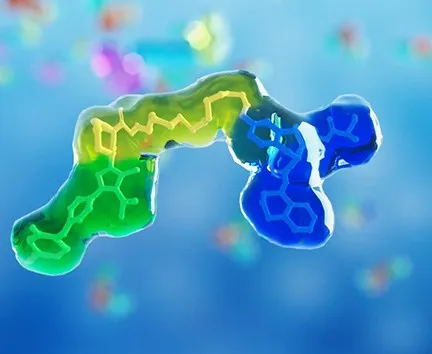
在众多创新策略中,靶向蛋白降解近年来备受关注。以PROTAC®为代表的新型分子不再通过抑制蛋白功能来实现作用,而是通过招募E3泛素连接酶,将目标蛋白(POI)标记并引导至蛋白酶体降解,从源头上切断病理机制。由于PROTAC®分子无需与POI的特定活性位点结合即可触发降解,对传统难以成药的靶点(如转录因子)提供了全新的干预可能。同时,PROTAC®分子在完成降解后还能循环利用,这也有望增强药效、降低剂量需求,从而提升治疗的安全窗口。
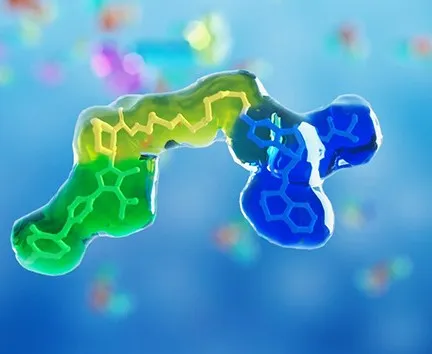
在靶向蛋白降解疗法约10年的产业转化历程中,药明康德几乎全程参与,为合作伙伴提供一体化赋能。在PROTAC®刚刚起步时,药明康德就前瞻性地布局了相关能力和技术,搭建了集发现、合成、分析纯化和测试等能力于一体的一体化赋能平台,助力全球合作伙伴高效推进药物从早期发现到临床试验阶段。伴随着新型靶向蛋白降解技术的持续涌现,药明康德紧跟科学前沿,迅速构建相关技术平台,如今能力已涵盖PROTAC®、分子胶、AUTAC、LYTAC、DUBTAC、RIBOTAC、PHICS以及DAC等主要分子类型。
截至今年年中,药明康德已与150多家公司在靶向蛋白降解化合物开发的各个阶段开展合作。在赋能全球客户的过程中,药明康德已合成了超过18.8万种复杂的靶向蛋白降解化合物,其中70多种已进入临床前候选药物阶段,10多种已进入后期开发阶段。
面向未来,科学家面对“不可成药”靶点已不再束手无策。如今,这些曾经阻碍药物发现的难题,反而成为激发创新的起点。随着结构生物学、化学生物学与新一代蛋白降解技术的不断融合,越来越多曾经被视为“不可成药”的蛋白正被一个个攻克。依托端到端的一体化CRDMO赋能平台,药明康德致力于加速客户开发突破性疗法,帮助合作伙伴将创新成果高效转化为造福全球患者的解决方案,以践行“让天下没有难做的药,难治的病”的愿景。
Redefining the “Undruggable”: A New Era in Precision Medicine
More than 85% of disease-associated proteins have long been considered “undruggable” because their structural and functional features limit the effectiveness of traditional small-molecule and antibody therapies. Today, breakthroughs in structural biology, chemical biology, and new modality mechanisms are redrawing the “undruggable” boundary: scientific advances and emerging treatment strategies are opening new intervention paths for previously unreachable targets, driving the approval of over 10 medicines against such “undruggable” proteins and propelling hundreds of additional candidates through development. Within this innovation wave, targeted protein degradation (TPD) has stood out for its ability to “eliminate disease-causing proteins at the source,” creating new opportunities for historically difficult proteins. WuXi AppTec invested early in TPD and built a fully integrated enabling platform around modalities such as PROTAC® degraders, helping global partners efficiently advance their programs from early discovery into clinical trials. This article examines the scientific challenges behind “undruggable” targets and highlights how cutting-edge technologies such as TPD are accelerating breakthroughs in reaching these challenging targets.
In the life sciences field, “undruggable” proteins refer to critical disease-driving targets that remain difficult to modulate using traditional therapeutic approaches. These proteins often play essential roles in maintaining cell fate, regulating signaling pathways, or driving disease progression. Yet their unique structural or functional characteristics make them challenging for small molecules or antibodies to bind with high selectivity. Mechanistically, several factors contribute to why certain proteins are considered “undruggable.”
First, some proteins lack well-defined binding pockets. A classic example is the RAS family of small GTPases—KRAS, HRAS, and NRAS—which for decades were deemed undruggable because their protein surfaces offer no obvious druggable sites. For proteins that function primarily through protein–protein interactions (PPIs), the challenge is equally significant: many transcription factors (TFs) and epigenetic regulators feature large, shallow, or structurally ambiguous PPI interfaces that are not easily accessible to conventional small-molecule engagement. Anti-apoptotic members of the Bcl-2 family exemplify this difficulty. Similarly, intrinsically disordered proteins (IDPs), characterized by highly dynamic structures and the ability to interact with multiple partners, lack stable binding interfaces and are therefore difficult to drug. In addition, phosphatases—key regulators of cellular signaling—pose their own challenge: their highly conserved active sites often lead to poor selectivity and higher safety risks, hampering drug discovery progress.
Beyond structural constraints, a protein’s functional attributes and cellular localization also shape its druggability. Many epigenetic targets and transcription factors are not only central to disease mechanisms but also indispensable for normal cellular function, increasing the likelihood of toxicity when inhibited. Compounding this complexity, these proteins are predominantly located in the nucleus, creating significant barriers for drug delivery—if a therapy cannot achieve sufficient nuclear concentration, it cannot exert its intended pharmacological effect.
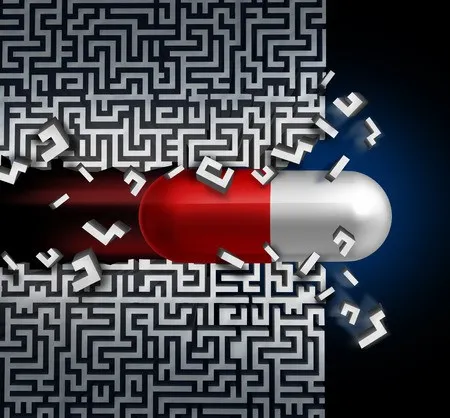
Source: 123RF
Against this backdrop, achieving highly selective targeting of undruggable proteins while overcoming drug resistance has emerged as both a major challenge and a high-potential frontier in pharmaceutical R&D. Transcription factors, for example, have drawn particular attention in oncology and neurodegenerative diseases. Key transcription factors of interest include p53, Myc, estrogen receptor (ER), and androgen receptor (AR) involved in tumorigenesis; XBP1 and NRF2 associated with aging and neurodegenerative disorders; as well as NF-κB, BTB, and BACH, which play critical roles in immune-related diseases.
However, rapid advances in science and technology are redefining what is possible. Many targets once viewed as undruggable are now being unlocked, driven by the emergence of new therapeutic modalities—including PROTACs (proteolysis-targeting chimeras), molecular glues, peptides, and complex macrocycles. To date, more than 10 medicines aimed at previously undruggable targets have been approved, and hundreds more are advancing through clinical development.
In August of this year, the U.S. FDA has accepted the New Drug Application (NDA) for the PROTAC® therapy vepdegestrant, intended for patients with previously treated estrogen receptor-positive (ER+)/HER2-negative metastatic or advanced breast cancer harboring ESR1 mutations. According to the announcement, vepdegestrant is the first PROTAC® therapy to demonstrate clinical benefit in breast cancer patients. If approved, it will become the first FDA-approved PROTAC® estrogen receptor degrader.
Among these breakthrough strategies, TPD has gained significant traction. Rather than inhibiting protein function, innovative modalities such as PROTAC® molecules recruit E3 ubiquitin ligases to tag and direct disease-driving proteins (POIs) to the proteasome for degradation—shutting down pathogenic pathways at the source. Since PROTAC® molecules do not require binding to a traditional active site, they unlock intervention opportunities for historically difficult targets such as transcription factors. Moreover, because PROTAC® molecules can be catalytically recycled after inducing degradation, they may boost therapeutic potency, reduce dosing requirements, and potentially improve safety.
Over nearly a decade of targeted protein degradation development in the
industry, WuXi AppTec has been deeply involved at every step, providing partners
with fully integrated end-to-end support. Even in the early days of PROTAC®
research, WuXi AppTec proactively invested in relevant capabilities,
establishing a comprehensive platform that spans discovery, synthesis,
purification, and testing. As new generations of TPD technologies continue to
emerge, the company has rapidly expanded its capabilities, now covering PROTAC®,
molecular glues, AUTAC, LYTAC, DUBTAC, RIBOTAC, PHICS, DAC, and other leading
modalities.
To date, WuXi AppTec has collaborated with more than 150 companies around the world across all stages of TPD compound development. Over the years, WuXi AppTec has synthesized more than 188,000 complex TPD molecules, with over 70 advancing into preclinical candidate selection and more than 10 now in late-stage development.
Looking ahead, scientists are no longer constrained by so-called “undruggable” targets. What was once considered a barrier to innovation has now become a powerful starting point for breakthroughs. As structural biology, chemical biology, and next-generation protein degradation technologies converge, more and more once-intractable targets are becoming therapeutically accessible.
WuXi AppTec will continue leveraging its integrated, end-to-end CRDMO platform to unlock new possibilities and bring transformative therapies to patients worldwide—fulfilling the vision of “every drug can be made and every disease can be treated.”
 产业资讯
瞪羚社 2026-06-18
394
产业资讯
瞪羚社 2026-06-18
394
 产业资讯
深蓝观 2026-06-18
410
产业资讯
深蓝观 2026-06-18
410
 产业资讯
研发客 2026-06-18
452
产业资讯
研发客 2026-06-18
452
 热门资讯
热门资讯 微信公众号
微信公众号