
 会员动态
会员动态
 复宏汉霖
复宏汉霖  2026-06-03
 1673
1673
开创“去化疗”新范式:全球首个胃癌围术期术后去化疗方案,精准定位CPS≥5免疫获益人群
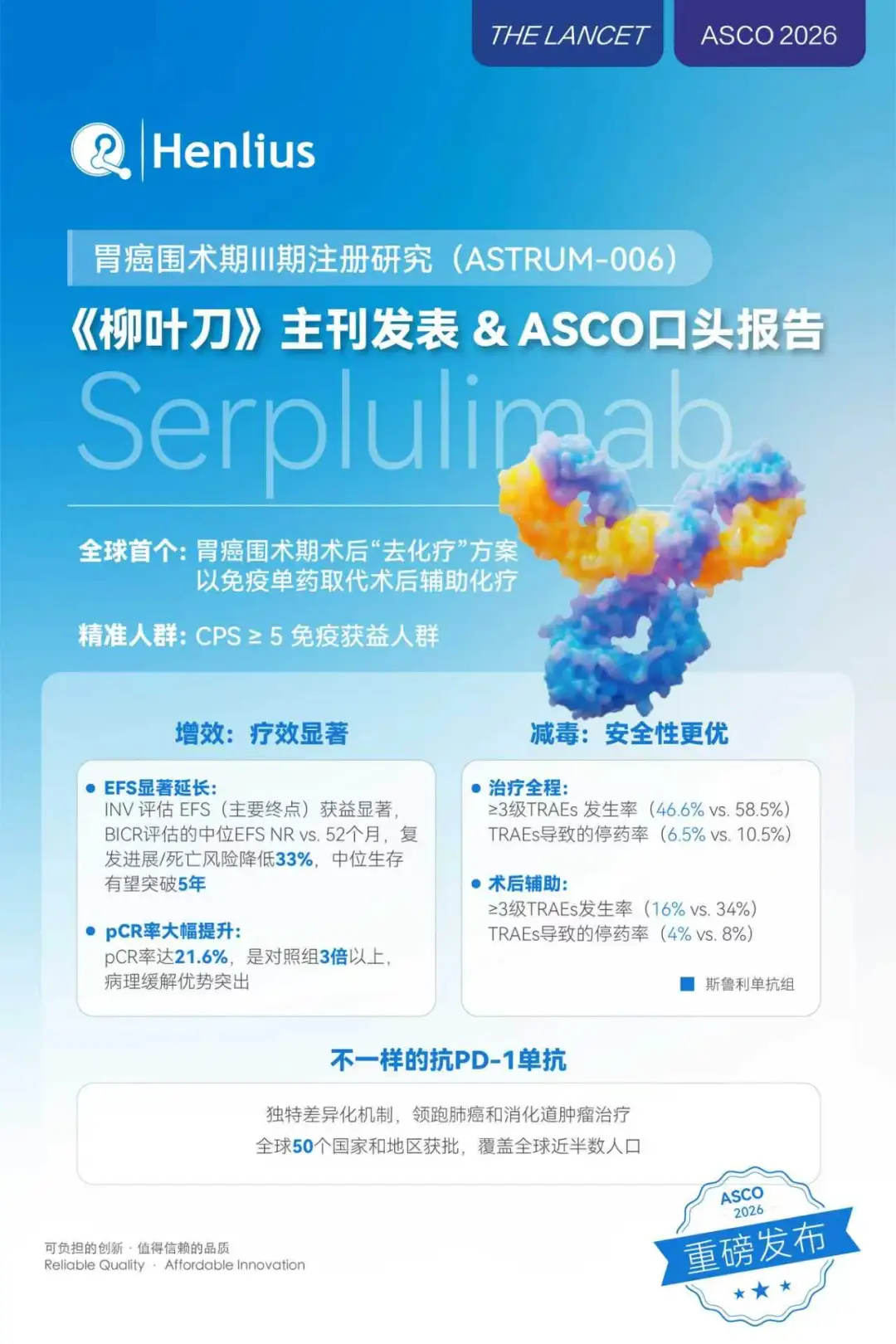
疗效显著获益:INV 评估 EFS(主要终点)获益显著,BICR评估的中位EFS在斯鲁利单抗组亦显著延长(NR vs. 52.0个月,HR=0.67),患者复发风险降低33%;斯鲁利单抗组pCR率达21.6%,是对照组(6.4%)的3倍以上,病理缓解优势突出。
安全性更优:斯鲁利单抗组≥3级TRAEs发生率(46.6% vs. 58.5%)及 TRAEs 导致的停药率(6.5% vs. 10.5%)均显著低于对照组,整体耐受性更佳,实现疗效与安全性的双重获益。
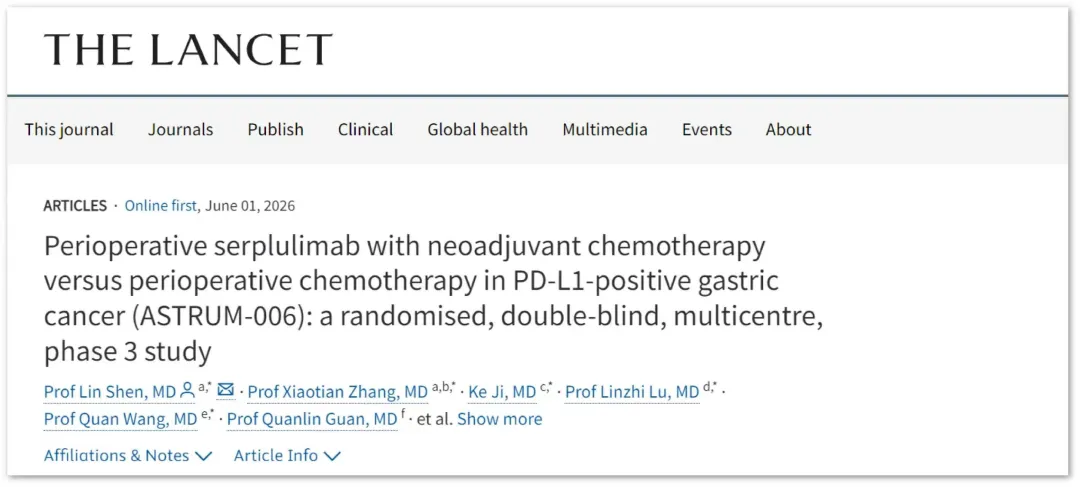
2026年6月2日,复宏汉霖(2696.HK)宣布,公司自主研发的创新型抗PD-1单抗H药 汉斯状®(斯鲁利单抗,欧洲商品名:Hetronifly®)用于胃癌新辅助/辅助治疗的III期临床研究(ASTRUM-006)数据,在2026 年美国临床肿瘤学会(ASCO)年会以口头报告的形式首次正式发布,并同步在线发表于国际顶尖医学期刊《柳叶刀》(The Lancet,影响因子:88.5),一举斩获国际两大顶级学术平台的权威认可。该研究由北京大学肿瘤医院季加孚教授、沈琳教授牵头。面对局部进展期胃癌居高不下的复发率与传统化疗带来的严重毒副作用,ASTRUM-006凭借卓越的疗效与更优的安全耐受性,为PD-L1阳性可切除胃癌患者,开辟了术后免疫单药去化疗的全新围术期治疗路径。
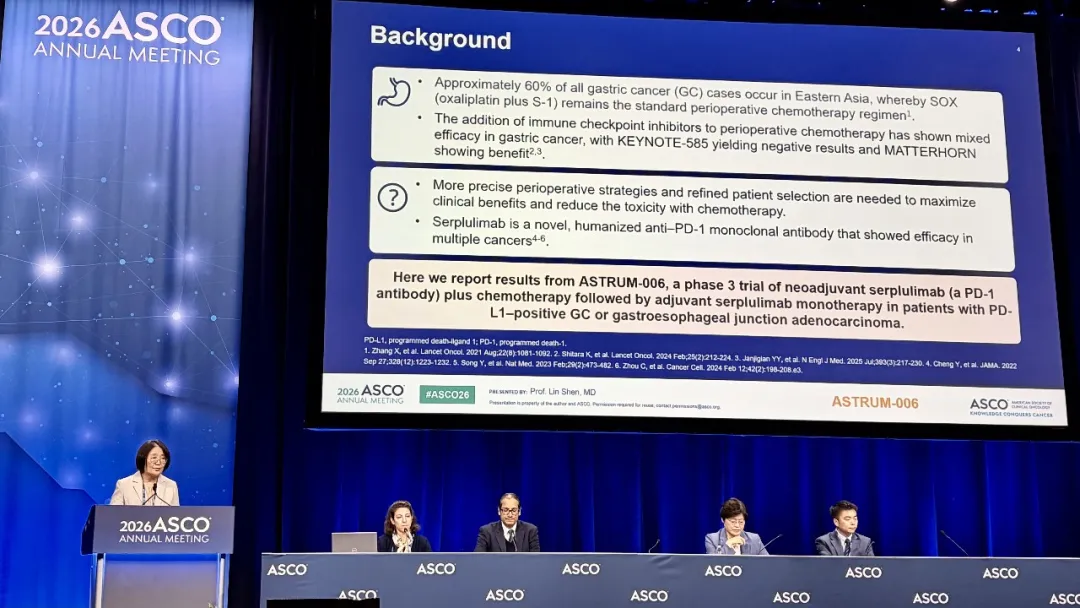

ASTRUM-006研究主要牵头人、北京大学肿瘤医院沈琳教授表示:
“ASTRUM-006研究在全球范围内首次验证了胃癌术后‘去化疗’免疫治疗模式。该方案精准锁定了免疫治疗的获益人群,创新优化了治疗路径,不仅在生存获益上取得里程碑式突破,且安全性和耐受性优势显著。相关成果已获《柳叶刀》发表及ASCO双重认可。我们期盼这一‘增效减毒’的创新方案加速进入临床,切实改善胃癌患者的生存质量与治疗体验。
”
疗效全面获益,EFS与pCR数据取得突破
据GLOBOCAN最新数据显示,2022年全球胃癌新发病例约96.9万例、死亡病例约66万例,其发病率和死亡率在所有癌症中均高居第五位1 。目前根治性手术是治疗胃癌的主要手段,而围手术期治疗(新辅助/辅助)策略的优化则成为改善患者长期生存的关键2。目前化疗是胃癌临床围术期标准治疗方案,但传统全程化疗模式复发风险仍较高,且毒副作用明显,临床亟需更精准、更有效的治疗方案。
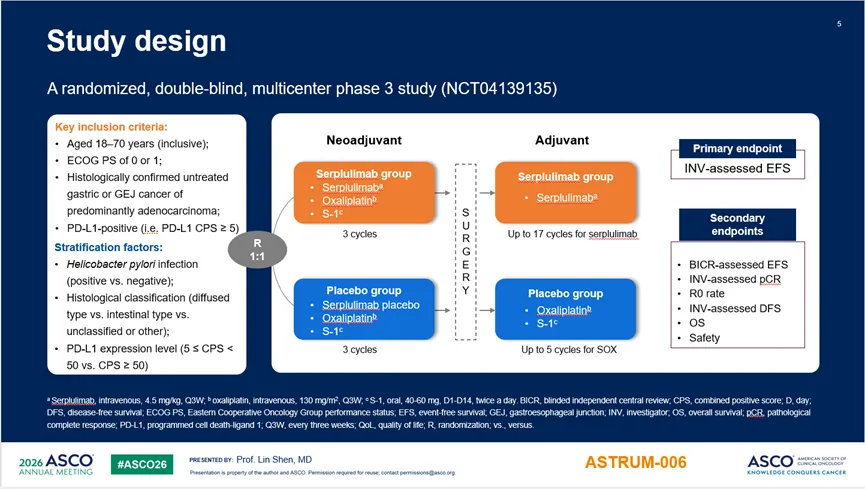
ASTRUM-006研究是一项随机、双盲、多中心的临床III期研究,旨在评估斯鲁利单抗联合化疗对比安慰剂联合化疗新辅助/辅助治疗胃癌的有效性和安全性。研究入组PD-L1阳性(PD-L1 CPS ≥ 5)、组织学确诊、未经治疗且可切除的胃癌或胃食管结合部(GEJ)腺癌的受试者,按1:1随机分组,接受3个周期的新辅助静脉注射斯鲁利单抗(4.5 mg/kg)或安慰剂,联合以S-1联合奥沙利铂(SOX)为基础的化疗方案(亚洲胃癌围术期标准化疗方案);术后继续接受辅助斯鲁利单抗单药治疗(最多17个周期)或辅助化疗(最多5个周期),每3周为一个周期(Q3W)。主要终点为研究者(INV)评估的无事件生存期(EFS)。次要终点包括经盲态独立中心评审(BICR)评估的中位EFS以及INV评估的病理完全缓解(pCR)以及安全性等关键指标。
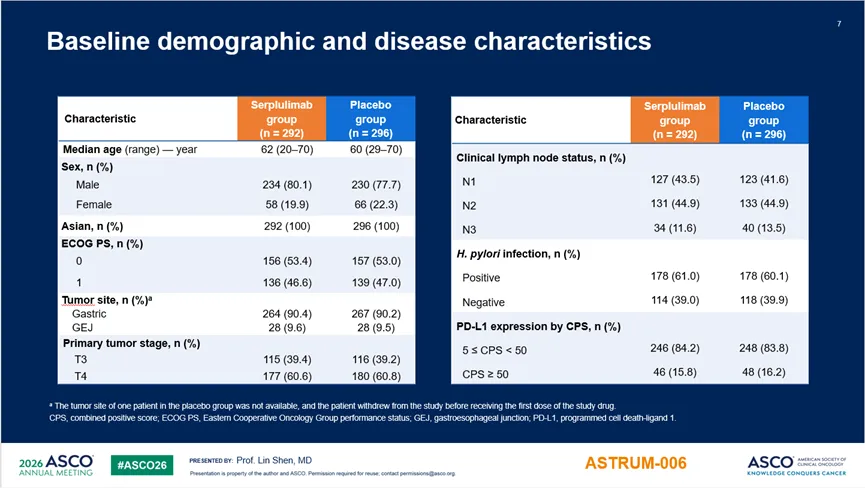
截至数据截止日期2025年8月19日,本研究于全国57家临床中心共纳入意向治疗(ITT)人群588例,按1:1随机分入斯鲁利单抗试验组(n=292)与安慰剂对照组(n=296),中位随访时间为35.9个月。两组基线人口学与疾病特征均衡可比,入组人群疾病分期偏晚,T4期原发肿瘤占比分别为60.6%与60.8%;体力状态分布方面,试验组与对照组
ECOG PS 1分患者占比分别为46.6%与47.0%,整体基线特征与局部进展期胃癌的临床诊疗现状高度契合。
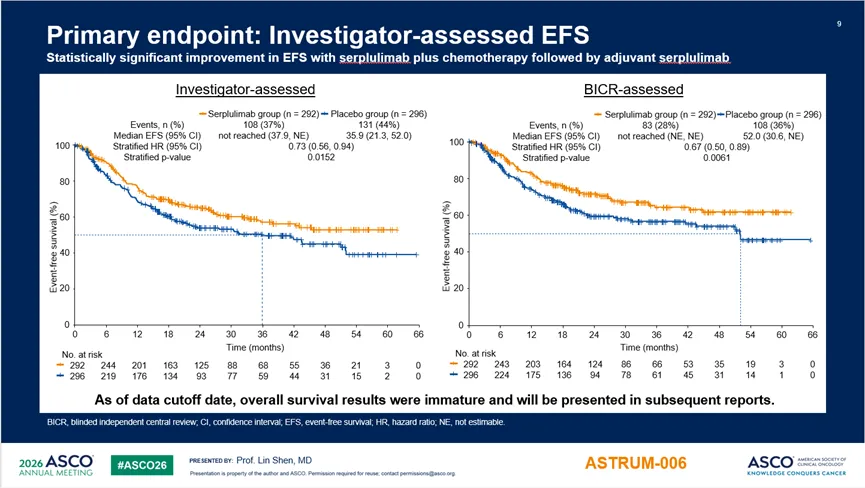
研究的主要终点,INV评估的EFS结果显示,斯鲁利单抗组中位EFS尚未达到,对比对照组35.9个月显著延长,风险比(HR)=0.73,95% CI
0.56-0.94,p=0.015,统计学差异显著;
BICR评估进一步夯实获益可靠性,斯鲁利单抗组中位EFS同样未达到,对照组为52.0个月,HR=0.67,95% CI 0.50–0.89,
p=0.0061,有效降低患者复发、进展及死亡风险33%,充分证明疗效稳健。
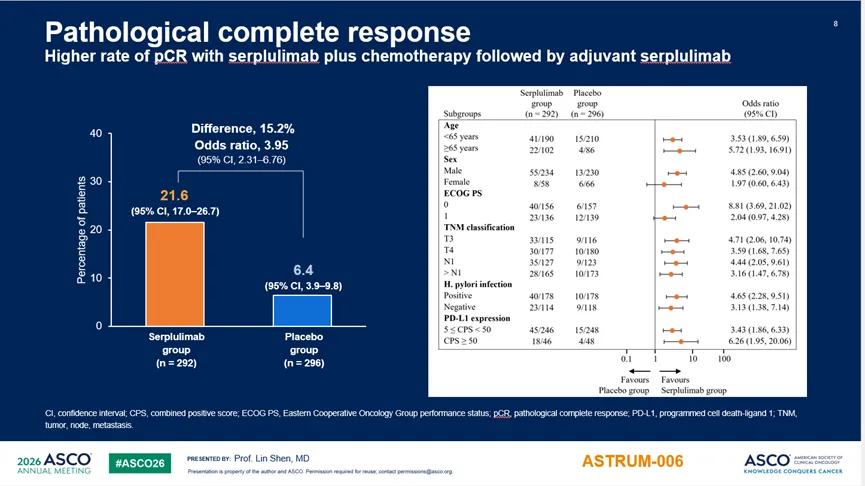
在病理缓解层面,斯鲁利单抗组pCR率高达21.6%,较化疗对照组6.4%大幅提升至三倍以上,组间差距明显,比值比(OR)达3.95,实现更为明显的肿瘤深度退缩。同时各年龄、性别、体能状态、肿瘤分期、幽门螺杆菌感染及不同
PD-L1 表达亚组均能实现一致获益。目前研究总生存期数据尚在持续随访中,未来将进一步补充长期生存证据。
增效减毒:“去化疗模式”凸显安全耐受优势
ASTRUM-006 研究首次在胃癌围术期证实,化免联合新辅助/术后免疫单药的 “去化疗模式”,在显著提升疗效的同时,大幅降低传统全程化疗的毒副作用,实现疗效与安全性的双重获益。
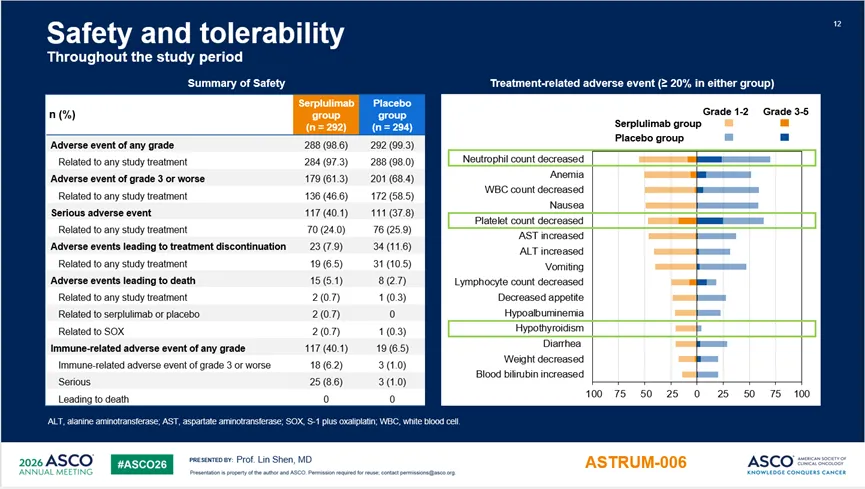
全程安全性数据显示,与化疗对照组相比,斯鲁利单抗方案在提升疗效的同时显著降低了毒性反应,核心安全性指标全面改善。试验组≥3 级治疗相关不良事件(TRAEs)发生率为 46.6%,明显低于对照组的 58.5%;因TRAEs导致停药的比例,试验组仅为6.5%,较对照组的10.5%大幅下降,治疗中断风险明显降低,充分验证了斯鲁利单抗治疗方案的安全可控性与长期应用潜力。此外,根据《柳叶刀》杂志中发表的详细数据,在辅助治疗阶段,斯鲁利单抗组≥3级TRAEs发生率显著低于安慰剂组(16% vs. 34%),导致任何药物永久停用的TRAEs发生率同样显著更低(4% vs. 8%)。
斯鲁利单抗组术后采用免疫单药辅助治疗,无需接受传统辅助化疗,从根源上减少了化疗相关的骨髓抑制(中性粒细胞、血小板、白细胞减少)、恶心呕吐等严重不良反应,且免疫相关不良事件(如甲状腺功能减退)均以轻中度为主,患者耐受性更好、生活质量更高。这一 “精简高效” 的围术期方案,打破了传统化疗毒副作用大、患者依从性差的困境,为 PD-L1 阳性胃癌患者提供了更优的长期治疗选择。
ASTRUM-006的成功标志着胃癌围术期治疗树立了“增效减毒”的里程碑,有望改写全球临床诊疗标准。基于ASTRUM-006研究的积极数据,2025年12月,汉斯状®联合含铂化疗新辅助及术后辅助治疗用于PD-L1阳性可手术胃癌患者的上市注册申请获国家药品监督管理局受理,并被纳入优先审评。此前,H药于2025年11月获CDE纳入突破性治疗品种名单,成为胃癌围术期治疗领域首个获此认定的药物。2026年4月,汉斯状®胃癌围术期方案首次被纳入《CSCO胃癌诊疗指南(2026版)》。
差异化机制引领 全球布局持续提速
H药是全球首个且目前唯一胃癌围手术期III期注册研究成功的抗PD-1单抗,也是全球首个一线治疗小细胞肺癌的抗PD-1单抗*。临床前研究证明,该药物不仅具备更强的PD-1内吞作用,可减少T细胞表面PD-1受体3,实现快速、强效的免疫激活;还能减少PD-1对共刺激分子CD28的募集,从而更大程度保留CD28信号传导4-6,增强下游AKT蛋白活性7,促进T细胞持续活化。基于这一差异化的机制,H药已在肺癌与消化道肿瘤等高发癌种的一线治疗中建立起稳固的治疗优势,于全球范围内**获批用于治疗鳞状非小细胞肺癌(sqNSCLC)、广泛期小细胞肺癌(ES-SCLC)、食管鳞癌(ESCC)及非鳞状非小细胞肺癌(nsqNSCLC)等多个适应症,并已在中国、英国、欧盟、新加坡、印度、瑞士、秘鲁等50个国家和地区获批上市,覆盖全球近半数人口,展现出极为广阔全球应用场景。此外,截至目前,H药已在奥地利、丹麦、德国、爱尔兰、意大利、西班牙和瑞典等10个国家纳入医保或公共支付体系,进入当地主流医疗保障体系,持续提升其临床价值、商业潜力及长期可及性。
此次 ASTRUM-006 研究同步登顶 ASCO与《柳叶刀》正刊,不仅彰显中国胃癌临床研究的全球引领力,更突破了胃癌传统围术期化疗局限,建立起精准筛选、疗效更强、毒性更低、方案更精简的治疗新范式。随着后续适应症正式获批与临床广泛应用,以H药为核心的围术期方案,将持续改写胃癌诊疗格局,惠及广泛可切除胃癌患者。
*截至2026年6月2日
**不同国家或地区的获批适应症请以当地药品监管部门发布的公告为准
关于复宏汉霖
复宏汉霖(2696.HK)是一家国际化创新生物制药企业,致力于为全球患者提供高品质、可负担的生物药,产品覆盖肿瘤、自身免疫疾病、眼科疾病等领域。自2010年成立以来,公司已构建涵盖全球研发、临床、注册、生产及商业化的全产业链平台,拥有全球员工近4,000人,并在中国、美国和日本等多地设有运营及分支机构。依托生物类似药形成的稳健现金流反哺创新研发,复宏汉霖正稳步迈入“全球化2.0”阶段,持续打造可复制、可持续的全球增长模式。截至2026年初,公司共有10款产品在全球60余个国家和地区获批上市,其中8款已在中国获批。在欧美主流生物药市场,复宏汉霖亦取得多项里程碑式突破,已有4款产品获得美国FDA批准、5款产品获得欧盟EC批准,充分体现了公司在研发体系、质量管理及生产能力方面已全面对标国际最高标准。
在创新驱动方面,复宏汉霖依托上海、美国等多地协同布局的研发体系,构建了多元化、平台化的创新技术矩阵,覆盖免疫检查点抑制剂、免疫细胞衔接器(包括多特异性TCE)、抗体偶联药物(ADC)以及AI驱动的早期研发平台等前沿方向。目前,公司拥有50余项处于早期阶段的创新资产,其中约70%具备同类最佳(Best-in-Class)潜力,并在全球同步推进30余项临床研究。核心产品H药 汉斯状®(斯鲁利单抗,欧洲商品名:Hetronifly®)作为全球首个获批一线治疗小细胞肺癌的抗PD-1单抗,正加速全球布局,已在全球50个市场获批上市;同时,多款潜力创新资产,包括PD-L1 ADC HLX43及新表位HER2单抗HLX22正全面推进全球关键性临床研究。依托通过中、欧、美三地GMP认证的生产体系,复宏汉霖已建成总产能达84,000升的生物药生产平台,形成覆盖全球六大洲的稳定供应网络。未来,复宏汉霖将始终坚持以患者为中心,聚焦未满足的临床需求,持续推动创新成果向临床价值与患者可及转化,在全球生物医药创新生态中创造长期而稳健的价值。
Featured in Both The Lancet and ASCO: Henlius’ Serplulimab Pioneers a New Perioperative Chemotherapy-Sparring Regimen for Gastric Cancer
Pioneering a new chemo-sparring regimen: The world’s first chemo-free perioperative regimen for gastric cancer, combined with adjuvant mono-immunotherapy, precisely targeting patients with PD-L1 CPS ≥5
Robust efficacy benefits: INV-assessed EFS, the primary endpoint, showed a significant improvement. Median EFS by BICR was also significantly prolonged in the serplulimab group (NR vs. 52.0 months; HR=0.67), translating into a 33% reduction in recurrence risk. The pCR rate reached 21.6% vs. 6.4%, more than tripling that of the control group.
Favorable safety profile: Grade ≥3 TRAEs (46.6% vs. 58.5%) and treatment discontinuation due to TRAEs (6.5% vs. 10.5%) were both lower with serplulimab than with placebo, supporting better tolerability and a favorable efficacy–safety profile.
Shanghai, China, June 2, 2026 — Henlius (2696.HK) announced that data from ASTRUM-006, a Phase 3 clinical study of its self-developed novel anti–PD-1 monoclonal antibody HANSIZHUANG(serplulimab, trade name in Europe: Hetronifly®) as neoadjuvant/adjuvant treatment for gastric cancer, were formally presented for the first time in an oral presentation at the 2026 American Society of Clinical Oncology (ASCO) Annual Meeting and simultaneously published online in The Lancet (IF: 88.5), gaining recognition from two of the world’s most prestigious academic platforms. The study was led by Professors Jiafu Ji and Lin Shen from Peking University Cancer Hospital. Against the backdrop of persistently high recurrence rates in locally advanced gastric cancer and the substantial toxicities associated with conventional chemotherapy, ASTRUM-006 has established a new perioperative treatment approach for patients with PD-L1–positive resectable gastric cancer, enabling a postoperative chemotherapy-free strategy with immunotherapy alone, supported by compelling efficacy and a more favorable safety and tolerability profile.
Professor Lin Shen from Beijing Cancer Hospital, a leading principal investigator of the ASTRUM-006 study, stated: “ASTRUM-006 is the first study worldwide to validate the chemotherapy-free immunotherapy regimen for postoperative gastric cancer treatment. This regimen accurately identifies patients who can benefit from immunotherapy and optimizes the treatment strategy. It delivers a milestone improvement in survival outcomes with outstanding safety and tolerability. The findings have been published in The Lancet and presented at ASCO. We hope this innovative regimen with superior efficacy and reduced toxicity can be rapidly adopted in clinical settings to improve patients' survival and treatment experience."
Broad Efficacy Benefits with Breakthrough Improvements in EFS and pCR
According to the latest GLOBOCAN data, there were approximately 969,000 new cases of gastric cancer and 660,000 deaths worldwide in 2022, ranking fifth among all cancers in both incidence and mortality.1 At present, curative surgery remains the mainstay of treatment for gastric cancer, while optimization of perioperative treatment strategies (neoadjuvant/adjuvant therapy) has become critical to improving long-term survival outcomes.2 Although chemotherapy remains the current standard perioperative treatment for gastric cancer, the traditional full-course chemotherapy approach is still associated with a relatively high risk of recurrence and considerable toxicity, underscoring the urgent clinical need for more precise and effective treatment options.
ASTRUM-006 is a randomized, double-blind, multicenter Phase 3 study designed to evaluate the efficacy and safety of serplulimab plus chemotherapy versus placebo plus chemotherapy as neoadjuvant/adjuvant treatment for gastric cancer. The study enrolled patients with PD-L1–positive (PD-L1 CPS ≥5), histologically confirmed, previously untreated, and resectable gastric cancer or gastroesophageal junction (GEJ) adenocarcinoma. Patients were randomized in a 1:1 ratio to receive three cycles of neoadjuvant intravenous serplulimab (4.5 mg/kg) or placebo in combination with S-1 plus oxaliplatin (SOX), a standard perioperative chemotherapy regimen for gastric cancer in Asia. After surgery, patients continued with either adjuvant serplulimab monotherapy (for up to 17 cycles) or adjuvant chemotherapy (for up to 5 cycles), administered every 3 weeks (Q3W).
The primary endpoint was investigator-assessed event-free survival (EFS). Secondary endpoints included median EFS as assessed by blinded independent central review (BICR), pathological complete response (pCR) as assessed by investigators, and other key safety measures.
As of the data cutoff date of August 19, 2025, a total of 588 patients were enrolled in the intention-to-treat (ITT) population across 57 clinical centers in China and randomized 1:1 to the serplulimab group (n=292) or the placebo group (n=296). The median follow-up was 35.9 months. Baseline demographic and disease characteristics were well balanced and comparable between the two groups. The overall study population had relatively advanced disease at enrollment, with T4 primary tumors accounting for 60.6% and 60.8% of patients in the serplulimab and placebo groups, respectively. In terms of performance status, patients with an ECOG PS score of 1 comprised 46.6% of the serplulimab group and 47.0% of the placebo group. Overall, the baseline characteristics of the enrolled population were highly consistent with the real-world clinical profile of patients with locally advanced gastric cancer.
The study met its primary endpoint, with investigator-assessed event-free survival (EFS) showing a significant improvement in the serplulimab group. The median EFS was not reached in the serplulimab group, compared with 35.9 months in the control group (HR=0.73; 95% CI, 0.56–0.94; p=0.015), demonstrating a statistically significant difference. The benefit was further reinforced by BICR. Median EFS was also not reached in the serplulimab group versus 52.0 months in the control group (HR=0.67; 95% CI, 0.50–0.89; p=0.0061), corresponding to a 33% reduction in the risk of recurrence, disease progression, or death, further confirming the robustness of the efficacy findings.
In terms of pathological response, the pCR rate in the serplulimab group reached 21.6%, more than tripling that observed in the placebo group (6.4%), with a marked between-group difference (OR=3.95), indicating a substantially greater depth of tumor regression. Consistent benefit was also observed across subgroups defined by age, sex, performance status, tumor stage, Helicobacter pylori infection status, and PD-L1 expression levels. Overall survival (OS) data remain immature and follow-up is ongoing. Longer-term survival outcomes will be further evaluated as additional data become available.
Improved Efficacy with Reduced Toxicity: A Chemo-Free Approach Highlights Safety and Tolerability Advantages
ASTRUM-006 is the first study in the perioperative treatment of gastric cancer to demonstrate that a chemotherapy-free approach—consisting of neoadjuvant immunotherapy plus chemotherapy followed by adjuvant immunotherapy alone—can deliver significantly improved efficacy while substantially reducing the toxicities associated with conventional full-course chemotherapy, thereby achieving dual benefits in both efficacy and safety.
According to the overall safety data, compared with the placebo group, the serplulimab-based regimen not only improved efficacy but also significantly reduced treatment-related toxicity, with broad improvements across key safety endpoints. The incidence of grade ≥3 treatment-related adverse events (TRAEs) was 46.6% in the serplulimab group, markedly lower than 58.5% in the control group. The rate of treatment discontinuation due to TRAEs was also substantially lower in the serplulimab group (6.5% vs. 10.5%), indicating a meaningfully reduced risk of treatment interruption and further supporting the manageable safety profile and long-term treatment potential of serplulimab. In addition, detailed data published in The Lancet showed that during the adjuvant treatment phase, the incidence of grade ≥3 TRAEs was significantly lower in the serplulimab group than in the placebo group (16% vs. 34%), as was the incidence of TRAEs leading to permanent discontinuation of any study treatment (4% vs. 8%).
In the serplulimab group, patients received adjuvant immunotherapy alone after surgery, eliminating the need for conventional adjuvant chemotherapy and fundamentally reducing severe chemotherapy-related toxicities such as myelosuppression (including neutropenia, thrombocytopenia, and decreased white blood cell count), as well as nausea and vomiting. Meanwhile, immune-related adverse events, such as hypothyroidism, were predominantly mild to moderate in severity, contributing to better tolerability and improved quality of life for patients. This streamlined and efficient perioperative strategy addresses the long-standing challenges of substantial chemotherapy-related toxicity and poor treatment adherence, offering patients with PD-L1–positive gastric cancer a more favorable long-term treatment option.
The success of ASTRUM-006 marks a new milestone of high efficiency and low toxicity in the perioperative therapy of gastric cancer, with the potential to redefine global clinical diagnosis and treatment standards. Based on the positive data from the ASTRUM-006 study, in December 2025, the New Drug Application (NDA) for serplulimab combined with platinum-based chemotherapy as neoadjuvant treatment, followed by adjuvant treatment after surgery, for PD-L1 positive, operable gastric cancer patients, was accepted by the National Medical Products Administration (NMPA) and granted Priority Review. Previously, in November 2025, serplulimab was granted Breakthrough Therapy Designation by the CDE, becoming the first drug in the field of perioperative treatment for gastric cancer to receive this recognition. In April 2026, the perioperative gastric cancer regimen of serplulimab was included for the first time in the CSCO Clinical Guidelines for Gastric Cancer (2026 Edition).
Differentiated Mechanism, Accelerating Global Expansion
Serplulimab is the world’s first and by far the only anti-PD-1 mAb to achieve success in a Phase 3 registrational study for perioperative gastric cancer and the first anti-PD-1 mAb approved for the first-line treatment of SCLC*. Preclinical studies have proven that serplulimab not only induces stronger PD-1 internalization—reducing PD-1 receptor presence on T cells for rapid and potent immune activation3—but also minimizes PD-1-mediated recruitment of the co-stimulatory molecule CD28, thereby preserving CD28 signaling,4-6 enhancing downstream AKT activity,7 and promoting sustained T-cell activation. Based on this differentiated mechanism, serplulimab has established a solid therapeutic advantage in the first-line treatment of high-incidence cancers such as lung cancer and gastrointestinal cancers. It has been approved for the treatment of squamous non-small cell lung cancer (sqNSCLC), extensive-stage small cell lung cancer (ES-SCLC), ESCC, and non-squamous non-small cell lung cancer (nsqNSCLC)**. Up to date, it has been approved in 50 countries and regions including China, the United Kingdom, the European Union, Singapore, India, Switzerland, and Peru, covering nearly half of the global population and demonstrating extremely broad global application scenarios. Moreover, to date, serplulimab has been included in reimbursement or public healthcare coverage systems in 10 countries, including Austria, Denmark, Germany, Ireland, Italy, Spain, and Sweden, thereby gaining access to mainstream healthcare systems in these markets and continuously enhancing its clinical value, commercial potential, and long-term accessibility.
The simultaneous presentation of ASTRUM-006 at ASCO and publication in The Lancet not only highlights the growing global leadership of China’s gastric cancer clinical research, but also breaks through the long-standing limitations of conventional perioperative chemotherapy in gastric cancer, establishing a new treatment paradigm characterized by precise patient selection, improved efficacy, lower toxicity, and a more streamlined regimen. With future regulatory approvals and broader clinical adoption, this serplulimab-based perioperative strategy is poised to reshape the treatment landscape for gastric cancer and benefit a broad population of patients with resectable gastric cancer.
*As of June 2, 2026.
**Approved indications may vary by country or region. Please refer to the announcements issued by the relevant local health authorities for approved indications in each market.
About Henlius
Shanghai Henlius Biotech, Inc. (2696.HK) is a global, innovation-driven biopharmaceutical company committed to delivering high-quality, affordable biologic therapies to patients worldwide. The Company focuses on major disease areas including oncology, autoimmune diseases, and ophthalmic diseases. Founded in 2010, Henlius has established an integrated, end-to-end biopharmaceutical platform encompassing global R&D, clinical operations, regulatory affairs, manufacturing, and commercialisation. The Company employs nearly 4,000 people globally and operates across multiple regions, including China, the United States, and Japan. Leveraging the stable cash flow generated from its biosimilar portfolio to support innovation, Henlius is steadily advancing into its “Globalisation 2.0” phase, building a scalable and sustainable global growth model. As of early 2026, Henlius has achieved regulatory approvals for 10 products across over 60 countries and regions worldwide, including eight approvals in China. The Company has also reached multiple milestones in major biopharmaceutical markets, with four products approved by the U.S. Food and Drug Administration (FDA) and five products approved by the European Commission (EC), reflecting its globally aligned R&D capabilities, quality systems, and manufacturing standards.
Driven by innovation, Henlius has built a diversified, platform-based technology ecosystem through coordinated R&D efforts across Shanghai, the United States, and other regions. Its innovation platforms span immune checkpoint inhibitors, immune cell engager technologies (including multispecific T cell engagers), antibody-drug conjugates (ADCs), and AI-enabled early discovery platforms. The Company currently has more than 50 early-stage innovative assets, approximately 70% of which are expected to be best-in-class, with over 30 clinical trials ongoing globally. Henlius’ core product, serplulimab (trade name: Hetronifly® in Europe), is the world’s first anti–PD-1 mAb approved for first-line treatment of small cell lung cancer and has been approved in 50 markets worldwide with an accelerated globalisation process. In parallel, multiple high-potential innovative assets—including the PD-L1 ADC HLX43 and the novel epitope anti-HER2 mAb HLX22—are advancing through global pivotal clinical development. Supported by a biologics manufacturing network with a total capacity of 84,000L and GMP certifications from regulatory authorities in China, Europe, and the United States, Henlius has established a stable global supply system serving six continents. Guided by a patient-centred mission, Henlius remains focused on addressing unmet medical needs and translating scientific innovation into meaningful clinical value and patient access, contributing sustainably to the global biopharmaceutical ecosystem.
To learn more about Henlius, visit https://www.henlius.com/en/index.html and connect with us on LinkedIn at https://www.linkedin.com/company/henlius/.
 会员动态
药通社 2026-09-12
762
会员动态
药通社 2026-09-12
762
 会员动态
丁香园Insight数据库 2026-09-10
906
会员动态
丁香园Insight数据库 2026-09-10
906
 会员动态
药渡 2026-09-08
912
会员动态
药渡 2026-09-08
912
 热门资讯
热门资讯 微信公众号
微信公众号