 产业资讯
产业资讯
 药明康德
药明康德  2026-08-06
 714
714
过去几十年间,药物发现的方式发生了深刻变化。
组合化学的兴起,使研究人员能够在短时间内合成海量分子;高通量筛选(HTS)和DNA编码化合物库(DEL)等技术的演进,则不断改写药物筛选的效率与规模。
随着越来越多传统靶点被充分挖掘、新兴治疗模式不断涌现,药物发现的挑战不只是“找到更多分子”,更在于找到更多样的分子。
如果进入筛选体系的分子缺乏足够的结构多样性,再大的化合物库,也可能只是对有限化学空间的重复探索。因此,如何覆盖更丰富的化学空间、更复杂的分子结构,成为拓展药物发现边界的关键命题。
在这一背景下,一类诞生于近70年前的经典化学反应,正以一种新的方式重新进入人们的视野。
从多步合成到一步构建
长期以来,复杂小分子的构建高度依赖多步反应路径:研究人员从简单结构出发,依次连接不同片段,每一步都在前一步完成后才能展开。经多轮反应与纯化,目标分子才最终成型。
这种“搭积木”式的逐步合成方法虽然可靠,却难以快速生成大量结构各异的新分子。
1958年,一个影响深远的新想法悄然诞生。在德国慕尼黑大学的实验室里,化学家Ivar Ugi观察到一个不同寻常的现象。
当胺、醛(或酮)、羧酸和异腈这4类组分被同时加入同一个反应体系后,它们并未按照人们熟悉的路径逐步构建产物,而是通过一系列连续发生的反应过程,一步生成结构复杂的目标分子。
这一反应后来被命名为Ugi反应。
以今天的视角来看,这样的多组分反应不仅能省去大量中间步骤,并且原料组合灵活,只需更换其中任意一种组分,就能够快速生成新的分子结构,有利于探索更广阔的化学空间。
不过,在诞生后的数十年里,Ugi反应并未立即成为药物化学领域的主流工具。直到20世纪90年代,随着组合化学兴起,人们开始寻求更高效的方法来构建和扩展化合物库,此时Ugi反应的真正潜力才得到释放。凭借一步生成复杂结构的优势,这类反应已经发展为构建化合物库、合成药物骨架的重要工具。
当经典化学遇上DEL
同样在上世纪90年代,另一项后来深刻影响药物发现的技术也开始萌芽。
1992年,DNA编码化合物库的概念被首次提出。
DEL的核心思路并不复杂:为每个化合物附上一段独特的DNA序列,相当于为每个分子赋予专属编码标签。研究人员随后可以将多达数十亿个化合物混合在同一个体系中,同时对目标蛋白进行筛选。筛选结束后,通过读取标签,研究人员就能快速识别出能够与目标蛋白结合的候选分子。
DEL技术大幅提升了化合物筛选规模,并逐渐成为现代药物发现的重要平台技术。
近年来,随着DEL技术的发展,如何让DEL覆盖更广阔的化学空间,成为研究人员关注的焦点问题。
在这一背景下,Ugi反应与DEL技术的互补优势显现。凭借生成结构多样性的优势,Ugi反应能够将更多复杂化学结构引入DEL,从而拓展DEL可探索的化学空间。
但问题在于,两项技术虽然理念契合,在技术层面却并不兼容。
在DEL技术中,一旦化合物携带的编码标签受损,其对应的身份信息便会丢失。而很多常见的有机反应条件,例如高温、强酸强碱、金属催化甚至部分有机试剂,都可能导致这一编码体系受损或失活。
Ugi反应同样面临这一挑战。经典Ugi体系依赖异腈这一关键组分,而异腈挥发性强、反应条件不够温和,并且容易产生副反应。这些因素都会提高DEL体系中的损伤风险,从而限制其在DEL中的应用。
如何既保留Ugi反应的优势,又让它能够真正兼容DEL体系?
药明康德生物学平台(WuXi Biology)研究团队在近期发表的一项研究中给出了答案。
新研究:寻找兼容新路径
异腈带来的兼容性挑战,成为研究团队首先需要解决的问题。他们试图寻找异腈的替代方案,从而构建一条更温和、更适合DEL体系的反应路径。
为此,研究团队将目光投向了一类名为三甲基硅氰(TMSCN)的试剂。
TMSCN能够在一定条件下模拟异腈参与Ugi类反应。在水相条件下,TMSCN能够自发反应形成活性中间体,并参与后续反应过程。
基于这一思路,研究团队构建了一套新的兼容反应体系。
相比于传统异腈体系,这一设计不仅规避了异腈在稳定性和操作性上的局限,而且无需额外催化剂即可进行,反应条件也更加温和。
进一步的研究表明,该反应的底物适用范围广,多种芳香醛和杂环脒类均能参与反应。利用这一策略,研究团队构建出一系列稠合咪唑并吡啶(imidazopyridine)骨架。
咪唑并吡啶长期受到药物研发领域关注。其丰富的三维构型和氢键相互作用,有助于增强小分子与靶蛋白的结合能力,已应用于多个获批药物以及肿瘤、炎症、中枢神经系统疾病等领域的在研管线中。
值得注意的是,在反应条件优化过程中,该体系对DNA编码标签表现出良好的兼容性,未观察到明显损伤,为其在DEL体系中的实际应用奠定了关键基础。
在此基础上,团队实现了从Ugi反应到后续修饰,再到编码标签连接的连续多步流程。这意味着,该方法不仅能实现单一步骤的反应验证,更具备融入真实DEL建库流程的潜力。
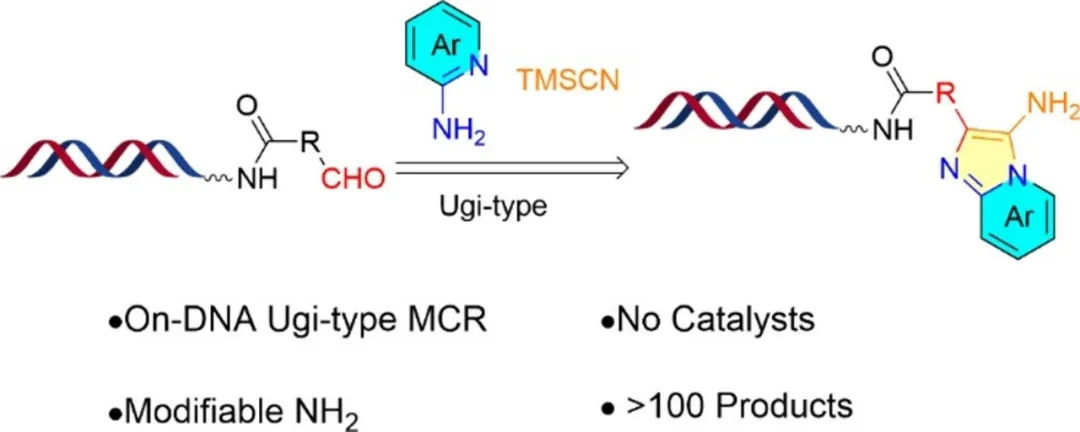
▲研究示意图(图片来源:参考资料[1])
当新的技术平台出现,那些曾经受限于时代条件的经典反应,也可能以新的形式重新释放潜力。该研究不仅为经典Ugi反应提供了一条适用于DEL体系的新路径,也为DEL平台引入了一类具有重要药理价值的骨架,使研究人员能够探索更多过去难以触及的分子结构。
DEL平台的持续拓展
这项成果背后,是药明康德多年来围绕DEL技术持续投入与能力建设的积累。
药明康德生物学平台于2018年从零起步建设DEL平台,将这项曾经高门槛的技术,发展为广大研究人员能够轻松使用的药物发现工具。
在数年的能力建设中,药明康德生物学平台已经构建了超过1400个DEL化合物库,提供了超过1.1万亿个DEL分子,每年为客户筛选数十亿级别的化合物。同时,团队还完成了超100种DNA兼容反应,可赋能创新骨架生成的需求,持续拓展DEL可覆盖的化学空间。
如今,药明康德已建立起成熟完善的DEL技术平台,并继续围绕各类新骨架引入、兼容反应等方向布局,持续赋能全球合作伙伴提供针对多种分子类型的新药发现。例如,从RNA靶向筛选到双功能分子发现,DEL正从传统筛选逐步延伸至更多新兴药物发现领域。
在药明康德,DEL平台已成为其新药发现体系的基石之一。药明康德生物学平台将DEL与片段筛选(Fragment Screening)、高通量筛选(HTS)等技术深度融合,打造了一个多维协同的综合发现平台,为客户提供系统性解决方案、提升早期药物发现成功率。
从DEL平台的持续进化,到让经典反应焕发新生,药明康德正不断拓展药物发现的空间与能力,让每一位新药研发的探路者多一条通往终点的路,助力全球合作伙伴更快地将新药带到患者身边。
Unlocking Chemical Space: How WuXi AppTec Leverages DEL to Advance Drug Discovery
By adapting established reactions and introducing new molecular scaffolds into DNA-Encoded Library (DEL) systems, WuXi AppTec expands the chemical space available for molecular exploration, enabling clients to advance drug discovery.
DEL Innovation Expands Chemical Space
Over the past several decades, advances in technologies such as high-throughput screening (HTS) and DEL have expanded the scope of drug discovery. As the field strives to explore broader regions of chemical space, expanding molecular diversity has become a central focus.
As the industry seeks to explore broader regions of chemical space, the team at WuXi Biology, a business unit of WuXi AppTec, continues to expand the capabilities of DEL-based discovery through the development of compound libraries, DNA-compatible reactions, and enabling technologies.
Since its introduction in 1992, DEL has become an important technology for early drug discovery. By attaching a unique DNA tag to each compound, researchers can screen billions of molecules simultaneously against a biological target and rapidly identify potential binders through reading the tag.
However, the value of DEL is not determined solely by library size. The diversity of molecular structures contained within those libraries is equally important. Even extremely large libraries may repeatedly sample similar regions of chemical space if the underlying chemistry remains limited.
As a result, introducing novel chemical scaffolds and expanding the range of reactions compatible with DEL have become key challenges across the industry.
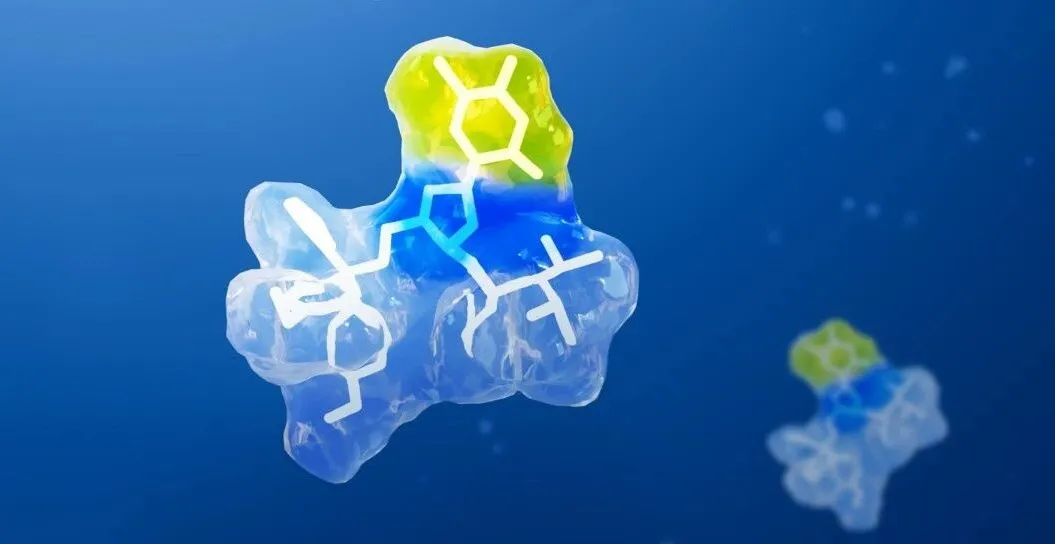
Adapt Classical Chemistry for Modern Drug Discovery Platforms
Many classical chemical reactions predate modern drug discovery platforms. Now, WuXi Biology bridges this gap by adapting classical chemistry for compatibility with contemporary screening technologies.
One example is the Ugi reaction, first discovered by chemist Ivar Ugi in 1958. Unlike traditional stepwise synthesis approaches, the Ugi reaction enables multiple building blocks to be assembled into a complex molecule within a single reaction process.
Because different reaction components can be readily exchanged, the Ugi reaction offers an efficient way to generate structurally diverse molecules and has become an important tool for combinatorial chemistry and compound library construction.
Despite these advantages, the reaction has faced limitations in DEL applications because traditional Ugi chemistry relies on isocyanides and reaction conditions that are not always readily transferable to DEL systems.
This created an opportunity to revisit a well-established reaction through the lens of modern drug discovery needs.
Develop a New DNA-Compatible Strategy
To further expand the chemical space accessible through DEL, the WuXi Biology team developed a new Ugi-type strategy that enables the benefits of Ugi chemistry to be applied within DEL workflows.
The research team explored trimethylsilyl cyanide (TMSCN) as an alternative
reagent capable of participating in Ugi-type transformations under mild aqueous
conditions.
The resulting reaction system addressed several practical limitations associated with conventional Ugi chemistry while enabling the generation of fused imidazopyridine scaffolds, a class of structures that has attracted considerable interest due to its presence in approved therapies and pipelines across oncology, inflammation, and central nervous system disorders.
Importantly, the reaction conditions preserved the integrity of encoded molecules throughout the process, providing a foundation for practical application within DEL systems.
The researchers further demonstrated a workflow that connected Ugi-type chemistry, downstream modification, and tag incorporation, highlighting the potential for integration into real-world DEL library construction processes.
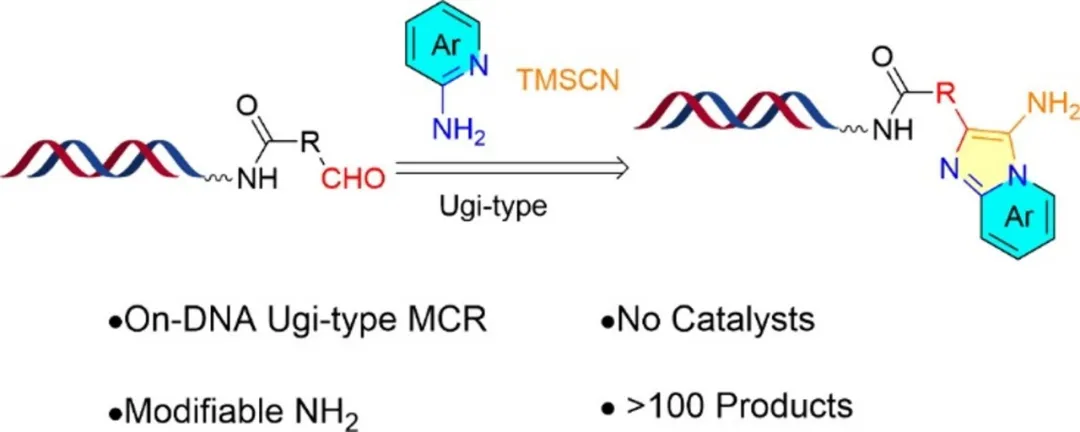
Image source: Reference [1]
Expand the Capabilities of DEL-Based Drug Discovery
Building on years of platform development, WuXi Biology continues to expand DEL-based drug discovery by developing new libraries, introducing novel scaffold-generating chemistry, and broadening the range of molecular structures that can be explored through DEL.
Since establishing its DEL platform in 2018, WuXi Biology has built more than 1,400 DEL libraries containing over 1.1 trillion encoded molecules. The team has also developed more than 100 DNA-compatible reactions that support the introduction of novel chemical scaffolds and continued expansion of accessible chemical space.
Today, the DEL platform supports discovery efforts across a growing range of applications. Beyond traditional small-molecule screening, DEL is increasingly being applied to emerging areas such as RNA-targeted discovery and bifunctional molecule research.
As part of WuXi Biology’s broader discovery capabilities, DEL is integrated with technologies such as HTS and fragment screening to provide a comprehensive toolkit, enabling clients to efficiently identify and advance promising leads for drug discovery programs.
Key Takeaways
WuXi AppTec expands chemical space for drug discovery through continuous innovation in DEL technologies.
The team at WuXi Biology, a business unit of WuXi AppTec, developed a novel Ugi-type reaction strategy that enables structurally diverse scaffolds to be incorporated into DEL workflows, translating classical reactions into practical tools for modern drug discovery platforms.
Since establishing its DEL platform in 2018, WuXi Biology has established more than 1,400 DEL libraries containing over 1.1 trillion encoded molecules to support early-stage drug discovery.
WuXi Biology has developed more than 100 DNA-compatible reactions to expand the range of chemical transformations available for DEL applications.
WuXi Biology integrates DEL with HTS and fragment screening, supporting emerging applications such as RNA-targeted discovery and bifunctional molecule research.
 产业资讯
RNAScript 2026-10-19
420
产业资讯
RNAScript 2026-10-19
420
 产业资讯
识林 2026-10-19
389
产业资讯
识林 2026-10-19
389
 产业资讯
BioTender 2026-10-19
395
产业资讯
BioTender 2026-10-19
395
 热门资讯
热门资讯 微信公众号
微信公众号